She did't want to be alive. Then She Quit Drinking Alcohol.
Updated: 1 day ago

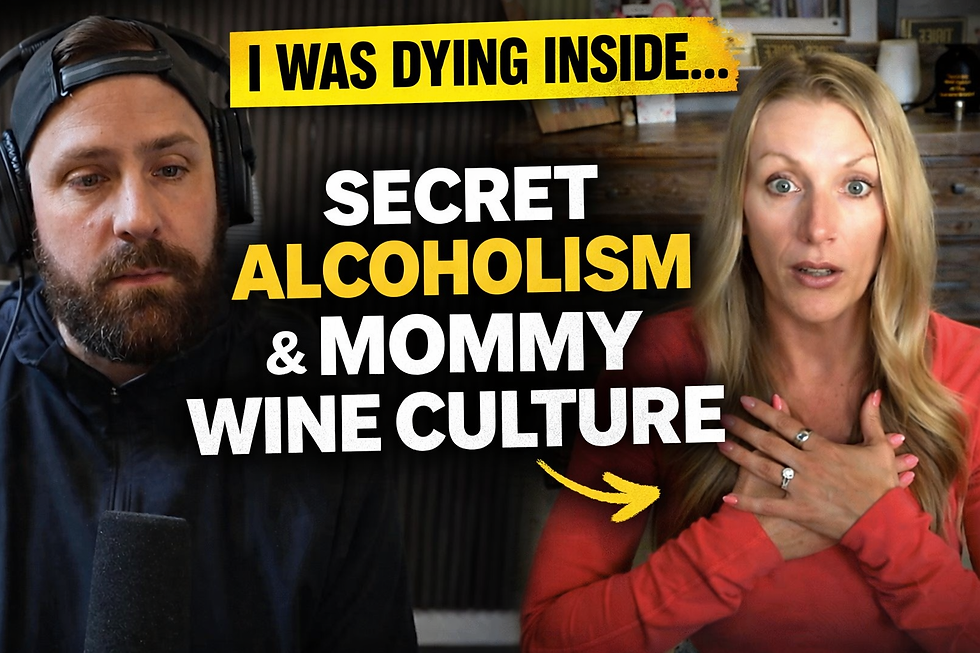
Brittany's mom used to warn her growing up. "Be careful," she would say. "Alcoholism runs in both sides of your family." Brittany watched her father drink every single day throughout her entire childhood in rural Minnesota. She hated it. She swore she would never touch alcohol. Then she watched her friends start experimenting in their teens, and something shifted.
"They're making it not look so bad," she thought. "And I'm not my dad, so that's not gonna happen to me if I try to give this a go."
She was wrong about that. And on January 3, 2025, after more than a decade of drinking, a toxic relationship she barely survived, and a body that had stopped keeping up, Brittany decided to quit drinking alcohol for good. This is what she learned on the way there, and what the first eleven months of sobriety actually looked like.
Growing Up With an Alcoholic Parent Changes Your Relationship With Alcohol
From the time she was small, Brittany suffered from severe clinical depression. Home life was loving but heavy. Her dad drank every day, and she spent her childhood wishing he would stop.
"I used to remember thinking like, man, why can't you just stop? I had a negative viewpoint on alcohol and thought it wasn't something I'd ever want to mess around with because of him."
That early resolve faded fast once her peers started drinking. Brittany was what she calls a lone wolf in school, a straight-A student who felt more adult than the kids around her. She wanted to belong. Alcohol became the shortcut.
The lesson here is one almost every guest on the Sober Motivation Podcast names in some form. Knowing that addiction runs in your family does not protect you from it. Seeing the damage it did to someone you love does not inoculate you. If anything, it sets up the exact internal script that pulls you in: I am not them. My experience will be different. I will be the exception.
If your story started in a home where alcohol was present, you might relate to Don's story of watching his dad drink himself to death and nearly doing the same thing.
The Performance of Functional Drinking
By her early twenties, Brittany had a good career in the car business, a college degree, a 4.0, and travel stamps in her passport. On paper, everything worked.
Behind the scenes, she was drinking almost every day. Two bottles of wine alone at night became normal. She was methodical about how her drinking appeared to other people.
"It was a full-time job managing my drinking and how it appeared to others. I would drink before I went to the function, show up composed and articulate, and they'd have no idea. My tolerance was very high. Then I'd drink at the function and then when I got home."
This is the part of the story that rarely makes the highlight reel. The woman at work who hits her deadlines. The friend who keeps her house clean. The girlfriend who mirrors her partner's habits so she does not look reckless. Brittany was all of those. She was also, in her own words, dying inside.
If this sounds familiar, you are not alone. The same pattern shows up in the story of people who never hit a dramatic rock bottom but were being destroyed by alcohol from the inside out.
Why Alcohol Kept Winning, Even When She Knew She Was Sick
Brittany tried to quit many times. Each attempt followed the same loop: blame an outside circumstance, move to a new place, reset the environment, hope the craving would lessen.
When her long-term relationship ended, she went to stay with her parents. She called it her version of checking into rehab.
When her drinking crept back up, she tried a new city, then a quiet cabin in Wisconsin.
When that did not work, she tried a new job schedule, then a new dating app, then a new apartment.
Every change bought a few quiet weeks. Then the drinking came back harder. She was drinking alone, hungover at work every day, skin and bones, and increasingly unable to eat.
The principle Brittany finally absorbed is one of the most important ideas in recovery: wherever you go, there you are. Environmental change can give you temporary relief. It cannot do the internal work. Until you deal with what is actually happening inside you, alcohol will follow you to every new city, job, and relationship.
When Alcohol and an Abusive Relationship Collide
In early 2024, Brittany met someone on a dating app who did not drink the way she did. She was relieved. She thought his habits would rub off on her. What she did not see at first was his anger. Things thrown. Things punched. A Jekyll-and-Hyde pattern that eventually turned on her.
By late 2024, the relationship had become emotionally and psychologically abusive. In November, it turned physical. Brittany got him out of her home, broke her lease under the state's domestic violence protections, and went to stay with her family again. She was drinking more than ever to numb the trauma.
It was in that window, listening to domestic violence podcasts alongside sobriety podcasts, that she heard a sentence that unlocked everything.
"They said abusive relationships can be harder to break than a heroin addiction because of the trauma bond that forms. When they explained that, I had so many dots connect on my relationship with alcohol. It was a manifestation of what I had going on inside, reflected in a relationship."
The same cycle. The same highs and lows. The same way your brain treats the thing causing the harm as the solution to the harm.
The Day She Quit Drinking Alcohol for Good
Brittany's final drunk was in New Orleans on her birthday trip in late December 2024. Her ex had pulled her back in with an emotional email while her guard was down. She returned home to Minnesota still in contact with him.
On the morning of January 3, 2025, she was on the phone with him in her office. He was saying awful things. She hung up, blocked him, and started trembling at her desk. In that moment, she told herself the truth.
"Brittany, if you want to stay away from this person once and for all and reclaim your life, you need to also quit alcohol today. No ifs, ands, or buts. One or both of these things are going to end up killing you. You have to say goodbye to both."
That was day one. Eleven months later, she has not had a drink since.
Megan was also a very high functioning drinker.
How She Got Through Early Sobriety One Moment at a Time
The tool that changed everything was almost embarrassingly simple. About three weeks in, Brittany walked out of a heavy therapy session, got to her car in the snow, and felt a wave of craving crash over her. She was inches from driving to a bar.
Instead, she opened TikTok and typed what to do when you have an alcohol urge. She watched one video. Two minutes. By the end of it, the craving was gone.
"I can't believe I just fought off that heavy urge. That felt like a superpower in that moment."
That experience taught her what many people in early recovery never learn, because they never sit with a craving long enough to watch it move.
A craving is not a command. It is a wave, and waves break. The brain has been trained to reach for alcohol in a hundred different contexts. Every time you get through a craving without drinking, you weaken one of those neural pathways and start to build a new one. But the rewiring only happens through repetition.
Here is what kept Brittany sober in those first weeks and months:
One moment at a time, not one day at a time. When a craving hit, she only had to get through the next two minutes, not the rest of the day or the rest of her life.
Plugging in immediately. A TikTok, a podcast episode, a video from someone further down the road. Anything to buy time and interrupt the loop.
Accountability by disclosure. After the abuse, she told people in her life what had happened. That told her brain that going back was not an option.
Staying with her family in early sobriety. She treated it like her own self-directed rehab: a safe environment where drinking was not available or appropriate.
Tying the two together. Going back to alcohol meant going back to him. Going back to him meant going back to alcohol. Both were off the table.
What Life Actually Looks Like on the Other Side
Eleven months in, Brittany describes her old self as "lifetimes away." The clinical depression she carried her whole life has lifted. She is regulating her own emotions for the first time. She spends time in the gym, reads, and finds joy in simple things she used to be too numb to notice.
"I've never really known the most authentic version of me until now. I wanna cry in a joyful way. I feel immense gratitude. It feels miraculous."
She also names something many people in recovery eventually discover: sobriety does not remove suffering from your life. It teaches you how to suffer well.
"Suffering will always be a part of life in one way or another, but the art of learning how to suffer well is a gift you get with sobriety."
If You Are Still Stuck, Start Here
Brittany's message to anyone still in the loop she was in is direct and kind.
First, be gentle with yourself. Drinking is a survival mechanism. It is the tool you learned to use. Shame will not get you out of it. Shame is what keeps you in.
Second, keep flooding your mind with recovery content, even if you are still drinking. She listened to the Sober Motivation Podcast for years, sometimes drunk with mascara running down her face, hoping it would embed in her subconscious. It did. None of those attempts were wasted. They were the accumulation that made January 3 possible.
Third, trust that every attempt counts, even the failed ones. You might fail at day five and start over. You might need to fight the same battle many times before it lands. The muscles you are building are real.
Frequently Asked Questions
Why do children of alcoholics often develop drinking problems themselves?
Genetics, environment, and modeling all play a role. Growing up around problem drinking normalizes the behavior, even when a child hates it. Many adult children of alcoholics also carry unresolved trauma or depression that alcohol appears to medicate. As Brittany explained on the podcast, seeing her peers drink differently than her father made her believe her own experience would be safer. It was not.
What is the connection between trauma bonds and alcohol addiction?
A trauma bond is a psychological attachment formed through cycles of harm and reconciliation in an abusive relationship. Alcohol addiction mirrors this cycle. The drink causes harm, then provides temporary relief. The brain registers both the wound and the fix as coming from the same source, which makes the attachment extremely hard to break. Experts have noted that leaving an abusive relationship can be harder than quitting some drugs for this reason.
How can I quit drinking if I have tried many times and failed?
Every attempt builds evidence and insight that the next attempt can use. Rather than starting from zero, stack tools: recovery podcasts, sobriety apps to count days, a therapist, a safe environment, and in-the-moment distraction techniques for cravings. Pick a concrete day one, tell at least one person you trust, and commit to getting through only the next moment instead of the next year.
What do I do when I have a strong craving to drink?
Delay the decision. Cravings are waves that usually pass within a few minutes if you do not feed them. Open a recovery podcast, a sobriety video, or a text thread with someone who knows you are quitting. Brittany's first breakthrough was a two-minute TikTok that got her past the urge. The goal is not willpower, it is buying time until the wave breaks.
Is it possible to quit drinking without a dramatic rock bottom?
Yes. Many people in long-term recovery never had a DUI, a job loss, or a hospital stay. The quote Brittany referenced on the podcast captures it well: rock bottom is the point at which you stop digging. You can decide today that you are done, regardless of how outwardly bad things look. Internal suffering, a loss of joy, or simply being tired of the loop are reason enough.
Brittany shared her full story on the Sober Motivation Podcast. If her words landed with you, the best next step is to keep listening and keep reading. The stories are not just hers. They might be yours on the way out.
Listen or watch more episodes
Get Support in the Sober Motivation Community
You don't have to do this alone. The Sober Motivation App has live sober meetings every day, a day counter, and a community that gets it. Download free on iPhone or Android.
Want more stories like this? Listen to the Sober Motivation Podcast.
Comments