How to Quit Drinking Without Rehab or AA: A Real 30-Day Plan
Updated: 1 day ago
You can quit drinking without going to rehab, without going to AA, and without telling the whole world what you're doing. Plenty of people have. I've interviewed dozens of them on the Sober Motivation Podcast, and their stories have one thing in common. They built a plan that fit their life instead of forcing their life into someone else's plan.
One caveat up front. If you drink heavily every day, quitting cold turkey can actually be dangerous. So before we get into anything else, we need to talk about safety. Then we'll get into the real plan.
Can You Actually Quit Drinking Without Rehab or AA?
Yes. For a lot of people, quitting at home without a formal program works. Research from the National Institute on Alcohol Abuse and Alcoholism (NIAAA) has shown for decades that the majority of people who resolve a drinking problem do it without any treatment at all. That doesn't mean it's easy. It means most of the work happens outside a meeting room.
The people who pull it off don't white-knuckle it. They build systems. They change their environment. They find a few specific humans to talk to. And they accept that not drinking is only half the job. The other half is figuring out what to do with the hours, emotions, and boredom that alcohol used to fill.
Is It Safe to Quit Drinking Cold Turkey at Home?
For some people, yes. For others, it can cause seizures or delirium tremens, which are medical emergencies.
Talk to a doctor before quitting cold turkey if any of these are true:
You drink every day
You've been drinking heavily for months or years
You get shaky, sweaty, or sick if you skip drinks for a day
You've ever had a seizure
You drink in the morning to even out
If that's you, a short medical detox (often outpatient, often covered by insurance) is the safe move. Quitting at home without medical support in that situation can land you in the ER. It's not weakness to get help for withdrawal. It's just biology.
If you drink heavily only on weekends, or you've tapered already, or your daily use is moderate, home-based quitting is usually safe. Hydrate. Eat protein. Sleep. Plan for bad days 2 through 5.
Why So Many People Look for an Alternative to AA
First, the honest part. AA has helped millions of people get sober and stay sober for decades. For a lot of folks, it's the thing that saved their life. If it's working for you, or you've never tried it, please don't read this post as a reason to avoid it. It's one of the most accessible, free, proven paths to long-term sobriety on the planet.
That said, it isn't the only path, and it isn't the right path for everyone. Search volume for how to quit drinking without AA has climbed every year for a decade. There are real reasons.
Some people don't connect with the higher-power framing and want a secular approach. Some don't want to call themselves an alcoholic, because in their head that word doesn't fit and that identity feels like it makes the problem bigger than it is. Some have tried meetings and found the format wasn't the right fit for them at that moment. Some have social anxiety that makes any unfamiliar room hard, let alone one where you have to speak. Some live in a rural area where the nearest meeting is an hour away.
All of those are valid. Wanting an option that works with your life isn't a rejection of AA. It's just you trying to find the thing that gets you sober.
What Most People Get Wrong About Quitting on Their Own
The biggest trap is thinking quitting on your own means doing it alone. Those are two different things.
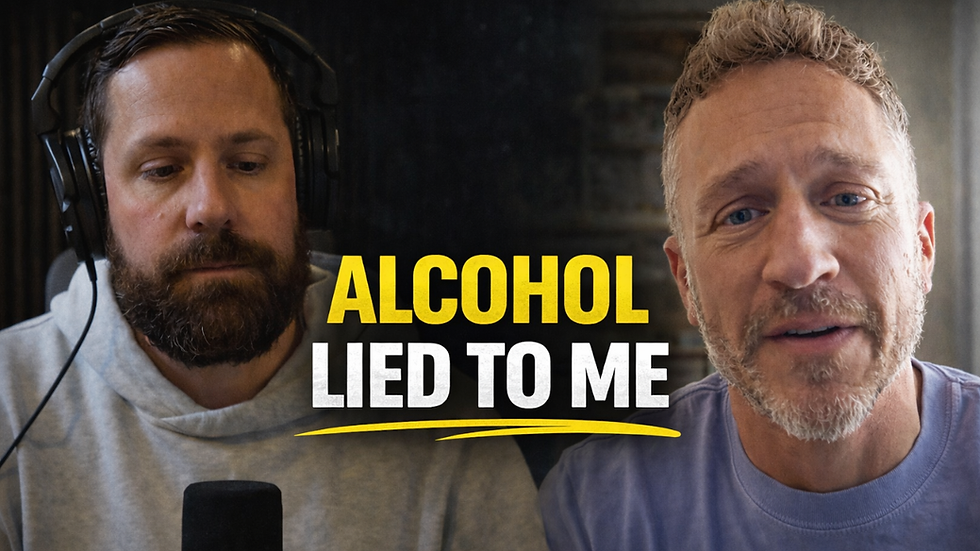
On the podcast, Gabe said it better than I could: I think if we could just quit drinking and not do any other work, we all would have done that. There'd be no podcast, there'd be no meetings, there'd be no rehabs, there'd be nothing. We would just wake up one day and say, I just want to quit drinking. Gabe, Sober Motivation Podcast.
Translation: you don't need AA, but you do need something. You need support, structure, some kind of accountability, and something to do with the space alcohol used to take up. People who skip all of that and try to grit their teeth usually last about three weekends.
The other common mistake is the I'm not that bad voice. Alison talked about this on the podcast. She went to a couple of AA meetings early on and then talked herself out of ever going back. I told myself I don't have a problem the way true alcoholics have a problem. Alison, Sober Motivation Podcast. That's the line that kept her drinking for years longer than she needed to.
I don't need AA can be true. It can also be denial wearing a costume. Be honest with yourself about which one it is before you build the plan. If you try the non-AA route and you're still drinking three months from now, that's information. Use it. Try something else. There is zero shame in walking into a meeting after trying to do it alone. Thousands of people in long-term recovery got there exactly that way.

What Actually Works: A 30-Day Plan You Can Start Tonight
Here's a tactical plan. It's not fancy. It works because it replaces the thing alcohol was doing in your life (filling time, dropping anxiety, marking the end of the day) with something else that does the same jobs.
Week 1: Survive
Clear every bottle out of the house. Block any delivery app that can send you alcohol. Tell one person what you're doing. Pick three non-alcoholic drinks you actually like and buy them today. Expect garbage sleep for 5 to 10 days. Don't drive past your old bars on the way home. Go to bed earlier than feels normal. That's the whole job for week 1.
Week 2: Replace
The hours between 5pm and 9pm are the battlefield. Fill them with specific things: walk, cook, read, lift, watch a show you've been meaning to watch, call someone. Boredom is a craving trigger. Don't leave the slot empty. If the old routine was come home, pour drink, decompress, the new routine has to be just as specific.
Week 3: Rebuild Routines
Morning becomes your new anchor. You'll start waking up clear for the first time in a long time, and that feeling is what pulls you through week 4. Start journaling, even badly. Five minutes counts. Get outside within the first hour of waking up. Small wins stack.
Week 4: Add Community
Whatever form fits your life. Quit-lit books. The r/stopdrinking subreddit (active and kind). A sober podcast. A Discord. A sober running group. A weekly text thread with one friend who gets it. If AA starts to sound less scary after a few weeks of clarity, go try one. If it doesn't, stick with what works. One real human you can message when it's ugly is worth more than any app.
The Hardest Days to Watch For
Most people assume day 1 is the worst. It isn't. Day 1 has adrenaline. The hard days come later.
Days 3 to 5. The physical stuff peaks. Bad sleep, anxiety, irritability, and the voice in your head negotiating.
Day 7. The first weekend. Friday night at 6pm is where most 30-day attempts die. Plan that night like it's an appointment. Something to do. Someone to text. A backup plan for the backup plan.
Days 14 to 21. The I feel fine, one won't hurt voice gets clever. This is where having a reason written down matters. Read it when the voice shows up.
Day 30. You start feeling good. That good feeling is exactly when the maybe I can moderate thought sneaks back in. Don't test it. People who relapse around day 30 almost always say the same thing. I thought I was fine now.
How to Build Support Without AA
This is the part people miss. You don't need AA, but you do need a bench.
Jacob, who was diagnosed with alcoholic liver cirrhosis at 38 and is now sober, said it this way on the podcast: I didn't go to AA, so I can't speak to that, but maybe you find some friends in that. You have to put yourself out there, be vulnerable, to be able to create those connections with other people so that you can support each other. Jacob, Sober Motivation Podcast.
Things that count as support:
A podcast you listen to every day (lived-experience stories rewire the brain faster than advice)
One friend who has quit drinking, or is trying to
A therapist, counselor, or addiction-informed doctor who knows you're quitting
The Sober Motivation Community (15 meetings a week in a non-AA format)
r/stopdrinking or a sober Discord
SMART Recovery, Recovery Dharma, or LifeRing, which are secular peer-support alternatives
Apps like Sober Motivation if tracking keeps you honest
A partner who is genuinely on your side
Stack two or three. One rarely holds the weight.
Dre, who is now 4 years sober, did most of her first year alone in her house. On the podcast she told me: I didn't go to meetings very often. Other sober support, I didn't have any. That first year of sobriety, I really just kind of hunkered down in my house. Dre, Sober Motivation Podcast. It worked for her. It also took a full year of deep solo work: journaling, a daily gratitude practice, reading, hiking, time alone. Quitting without AA isn't the easier path. It's a different path, and it's a lot of work.
Signs You Do Need More Help
Honest section, because blanket you can do this alone advice gets people hurt.
Get to an ER or call a doctor if:
You've had a withdrawal seizure before
You're shaking, hallucinating, or confused after stopping
You have a fast pulse and fever while sober
You've tried to quit several times and each attempt has gotten physically harder
Consider professional help (therapist, addiction doctor, outpatient program, medication) if:
You drink in the morning to stop shakes
You have bipolar, severe depression, or untreated anxiety
You have trauma that surfaces the second you stop numbing
You've relapsed three or more times in the last year
Rehab, outpatient programs, AA, SMART Recovery, Naltrexone, The Sinclair Method, sober coaches, and therapists all exist because they work. Using any of them isn't giving up on doing this your way. It's using the right tool for your situation. The goal is not drinking. How you get there is up to you.
The Bottom Line
You can quit drinking without rehab and without AA. It takes a plan, a small bench of real people you can lean on, a true replacement for what alcohol was doing in your life, and the honesty to notice when you're lying to yourself about how bad it is.
The first 30 days are mostly about not drinking through a predictable set of hard moments: the 5pm craving, the first sober weekend, the first argument, the first time someone offers you one. Get through those and you start to remember what mornings feel like.
If you're reading this at 11pm on a Tuesday, wondering whether you're the only one who doesn't want to walk into a meeting, you're not. Thousands of people who listen to this show quit without AA. Thousands quit with it. Both paths work. Pick yours, pour out whatever is in the house, and start tonight.
Full episodes with Dre, Jacob, Alison, Gabe, and dozens of other people who quit without rehab or AA are free wherever you get podcasts. Search Sober Motivation. The community, with 15 meetings a week in a format that isn't AA, lives at on the Sober Motivation App.
You don't have to do this alone. The Sober Motivation App has live sober meetings every day, a day counter, and a community that gets it. Download free on iPhone or Android.
Want more stories like this? Listen to the Sober Motivation Podcast.


Comments