Liver Cirrhosis Nearly Killed Him. He Survived Without a Transplant.
Updated: 17 hours ago
Jacob didn't grow up in chaos. There were no broken homes, no trauma hiding in the background, no family history of addiction staring him down. He had loving parents, siblings who cared about him, and a childhood full of football games and family dinners. Yet over the course of ten quiet years, alcohol went from something casual to something that nearly killed him. Alcoholic liver cirrhosis is the scarring of the liver caused by long-term alcohol abuse, and it almost ended Jacob's life before he turned 40.

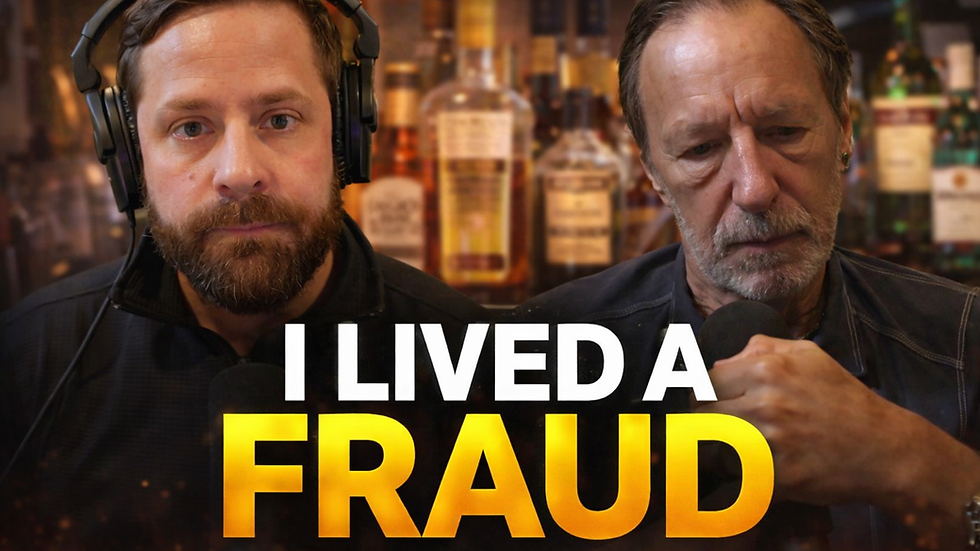
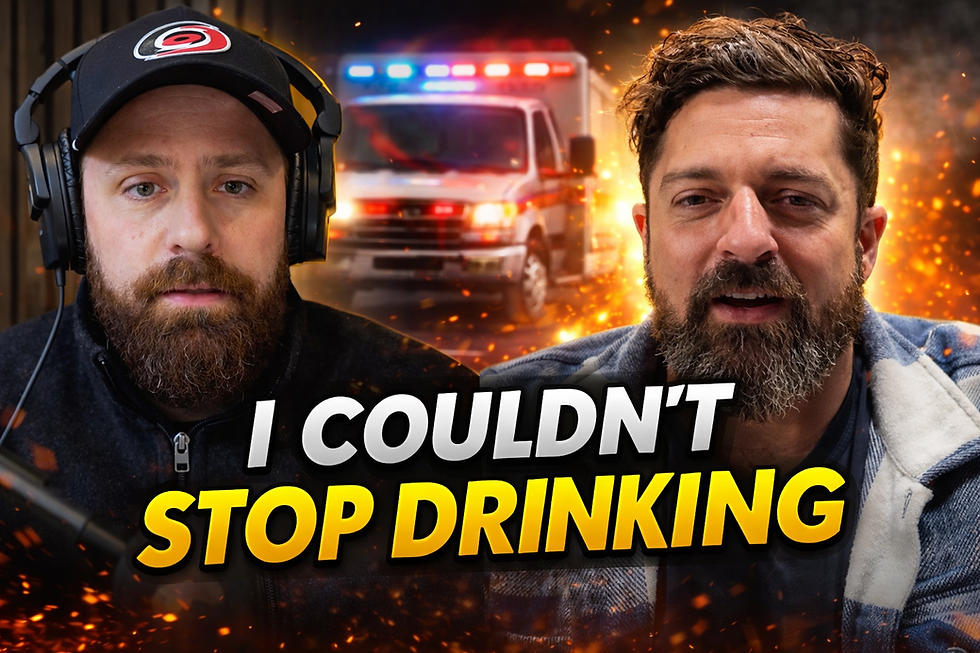
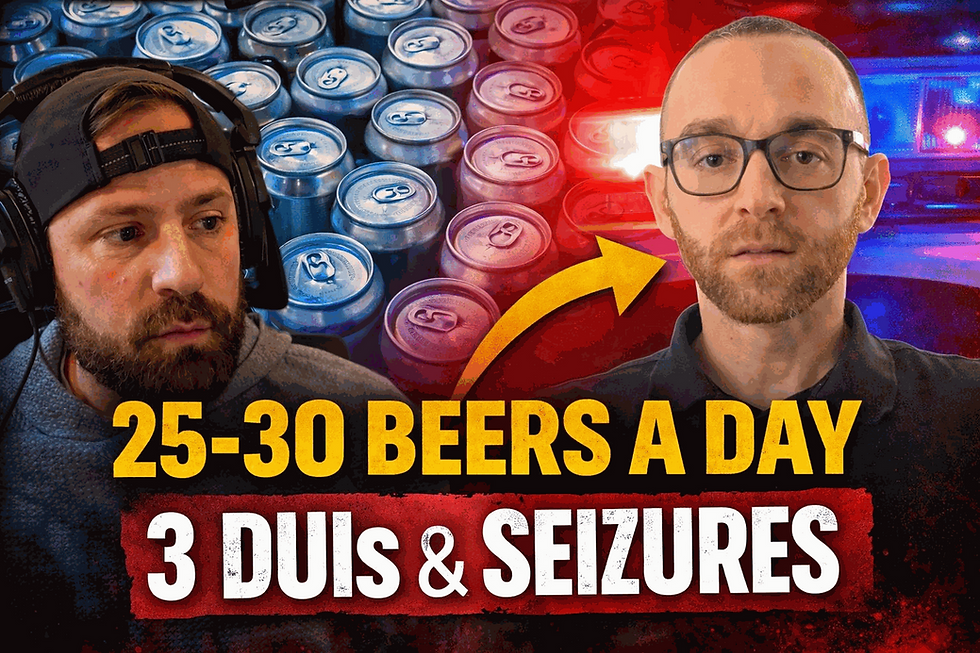
His story, shared on the Sober Motivation Podcast, is a reminder that alcohol addiction doesn't need a dramatic origin story. Sometimes it starts with a glass of wine after a stressful day and ends in a hospital bed.
When Drinking Doesn't Look Like a Problem
Jacob's relationship with alcohol began the way it does for millions of people. A few beers snuck at a campout in high school. A cocktail ordered at dinner to celebrate finally being 21. Nothing that would have alarmed anyone. Nothing that felt dangerous.
"It wasn't like I'm like, I gotta have 12 of them. It was just like, I thought it was fun to sneak a beer or two."
He got married young, started building a life, and alcohol stayed in the background. A drink at dinner. A night out with friends. The kind of moderate social drinking that most people never think twice about.
What made Jacob's story different wasn't the beginning. It was what happened once stress entered the picture. When he returned home to work in the family business and started taking on more responsibility, he noticed something. A drink at the end of a hard day made everything feel manageable. The tension loosened. The worry faded. And that, he now realizes, was the first red flag he never saw coming.
If you've ever wondered whether your drinking has quietly crossed a line, this story about someone who never hit rock bottom but was still being destroyed from the inside might feel familiar.
The Slow 10-Year Descent Nobody Saw Coming
Jacob pinpoints 2013 as the year everything started shifting. His first daughter was born that year, and while parenthood brought joy, it also brought new layers of stress and anxiety. Instead of developing healthy coping strategies, he reached for what had already worked: alcohol.
"Before it was kind of like a celebration. It was kind of fun. And now you're starting to use it for things that are to manage stress or to be feeling a little anxious and worried about the future."
The first five years were slow. One drink became two. Two became three. His tolerance grew so gradually that he barely noticed. By years six and seven, his wife started asking questions. "Do you really need another drink?" And rather than listening, Jacob started hiding it.
Bottles stashed in the basement cabinet. Drinks poured before making the "official" one his wife could see. A flask tucked away for when he needed a top-up. He started rotating between liquor stores and grocery stores so no single cashier would notice how often he came in. He bought the same brand every time so he could swap empty bottles without anyone catching on.
The hiding itself became a full-time job. And the shame that came with it only drove him deeper into isolation.
This pattern of hiding alcohol from loved ones is more common than most people realize. Megan's story about concealing wine from her family mirrors many of the same behaviors Jacob described.
How COVID Accelerated Everything
When lockdowns hit in 2020, whatever guardrails Jacob had left crumbled. He was an essential worker dealing with more stress than ever. Home became both his office and his bar. With nowhere to go and nothing to break the routine, drinking escalated from a nightly habit to something he couldn't imagine living without.
He gained weight. His presence as a father started to slip. He found himself rushing through bedtime stories, cutting his daughters short so he could get downstairs and pour a drink. He was physically there but emotionally checked out.
"I like to think I was still a good father, but seeing how I am now, you're more of a present father. I was maybe in a hurry to put them to bed so I could go have a drink."
Looking back, Jacob estimates he lost a full decade of his potential. At the time, he thought alcohol was helping him perform better at work, connect more easily with people, and manage the weight of adult life. In reality, it was quietly stealing the things he valued most.
The Day His Body Gave Out
In March 2023, something felt wrong. Jacob's stomach was swollen and hard in a way he couldn't explain. He thought it might just be bloating. His dad, who had suspected something wasn't right but didn't know how serious the drinking had become, urged him to see a doctor immediately.
At the clinic, Jacob stepped on the scale and realized he had gained what felt like ten pounds overnight. The doctor's face told the story before any test results came back.
"I can just see the look in his eye. I'll never forget that because it was like, he just had this concerned look on his face."
Every doctor and nurse asked the same questions. How much are you drinking? How often? Jacob, still deep in denial, downplayed it. "A couple every night," he told them, knowing it was far more. The fluid buildup in his abdomen, called ascites, required a procedure called paracentesis to drain. His skin turned yellow. His eyes showed jaundice. He was transferred to another hospital by ambulance.
Just two days before this hospital visit, Jacob had been at a community dinner. That is how quickly alcoholic liver disease can make itself known.
Jersey Mike's story about his eyes turning yellow overnight describes a hauntingly similar experience with alcohol-related liver failure.
A Diagnosis That Sounded Like a Death Sentence
The biopsies confirmed it: liver cirrhosis caused by alcohol. Jacob's MELD score, the calculation used to determine liver transplant eligibility and predicted survival, was devastating. Doctors gave him a life expectancy of roughly six months. If he made it longer than that, they warned, the decline would be painful and disorienting.
A liver transplant wasn't an option. There was, in the words of his medical team, no magic pill.
And even in that moment, with death staring him in the face, Jacob's addicted brain had one question: would he ever be able to drink again?
"I couldn't imagine life without it. I'm like, no one's gonna want to hang out with me because I can't drink anymore. You're literally dying right now and you're worried about whether or not you might be able to drink again. Your priorities are wrong here."
He shares this not to shock anyone, but to normalize it. If you or someone you love has had that same thought in a medical crisis, it doesn't mean they're broken. It means the addiction is still in control. And that can change.
How Functional Medicine Changed Everything
Jacob was being prepared for palliative care when a fill-in doctor asked a simple question: "Have you ever thought about functional medicine?"
His wife had been researching it already. She later described that moment as an answer to her prayers. Functional medicine focuses on treating the root cause of disease rather than just managing symptoms. For Jacob, that meant addressing his liver damage through targeted supplementation, dietary changes, and a specific treatment called alpha-lipoic acid (ALA) infusions.
The couple found a functional medicine doctor who was willing to roll up his sleeves and try. He couldn't guarantee anything, but he offered something Jacob hadn't felt in weeks: hope.
Jacob's wife tracked down a clinic in Wisconsin that offered ALA infusions. She had been prepared to travel to New Mexico for them. She made every phone call, booked every appointment, and pushed Jacob forward when he was ready to give up.
"My wife was the strength. She was the one looking for this. She says, 'You're gonna get better.' And thank goodness she did."
Combined with sobriety, a clean diet, cutting out sugar, and following every instruction from his functional medicine team, Jacob began to heal. His most recent blood work showed liver enzymes that were almost completely normal, a result his doctors called miraculous.
What Sobriety Actually Feels Like
Jacob's sobriety date is March 9, 2023. But the mental shift didn't happen overnight. For the first several months, he still thought about drinking. He wondered if he could handle one glass of wine with his wife. He imagined watching a Packers game with just one beer.
The turning point came about seven months in. He was at a gathering where someone had too much to drink, and a situation started getting out of hand. Jacob stepped in to calm things down, and in that moment, everything clicked.
"I was calm. I felt in control. It was like this aha moment. I felt so powerful. I was still very weak physically, but I felt so strong."
That clarity, the feeling of being truly present and capable, is what finally sold him on sobriety for good. He started reading "This Naked Mind" by Annie Grace on a friend's recommendation, which deepened his understanding of how alcohol works on the brain. He reconnected with a personal trainer who helped him rebuild his physical strength from the ground up.
Today, Jacob replaces alcohol with prayer, exercise, reading the Bible, and being genuinely present for his three daughters. The anxiety and stress haven't disappeared. Life hasn't suddenly become easy. But instead of reaching for a bottle, he does pushups. He says a prayer. He goes for a walk.
"Pushups and prayer instead of going to pour myself a drink."
Why Jacob Shares His Story
Jacob didn't set out to become a public figure in the sobriety space. But after sharing what happened to him, people started reaching out. Spouses asking what functional medicine their husband should try. Strangers admitting they were scared of their own drinking. Friends confiding that they too had been hiding bottles.
The response convinced him to keep going. Not for attention, but because shame thrives in silence, and the only way to break its grip is to speak.
"When you are open about your mistakes, when you admit that I screwed up or I have this weakness, all of a sudden this peace comes through. Now they feel safe to share things with you."
If there's one thing Jacob wants you to take from his story, it's this: don't wait until you're in a hospital being told you have months to live. Speak up now. Reach out to someone in the sober community. Tell one person the truth. You don't have to quit tomorrow, but you do have to stop pretending everything is fine.
Sobriety didn't just save Jacob's liver. It gave him back his daughters, his marriage, his career, and a version of himself he thought was gone forever.
Frequently Asked Questions
Can your liver recover from alcohol-related cirrhosis?
In some cases, yes. While severe scarring may not fully reverse, the liver has a remarkable ability to heal when given the right conditions. Sobriety is the single most important factor. Jacob's story shows that combining alcohol abstinence with functional medicine, dietary changes, and treatments like ALA infusions can lead to significant recovery, even when doctors have offered a grim prognosis.
What is functional medicine for liver disease?
Functional medicine is an approach that focuses on identifying and treating the root cause of a disease rather than just managing symptoms. For liver disease, this may include personalized supplementation, dietary protocols that eliminate sugar and processed foods, and targeted treatments like alpha-lipoic acid infusions. Jacob credits functional medicine with giving him hope and measurable results when conventional medicine had exhausted its options.
What are the early warning signs of alcohol-related liver damage?
Jacob experienced rosacea, redness in the face when drinking, tingling and stiffness in his legs, frequent illness, and eventually severe abdominal swelling caused by fluid buildup (ascites). Other common signs include jaundice (yellowing of the skin and eyes), unexplained fatigue, and sudden weight changes. If you're experiencing any of these symptoms and you drink regularly, it's worth getting checked by a doctor sooner rather than later.
How long does it take to feel the benefits of sobriety?
Jacob's experience suggests the timeline varies. He noticed physical improvements within the first few months as his body began to heal, but the full mental clarity and emotional shift didn't come until about seven months in. Many people in the sober community report a similar pattern: the body recovers faster than the mind, but once the mental fog lifts, the benefits of sobriety become unmistakable.
How do you stay sober when life gets stressful?
Jacob replaced his reliance on alcohol with prayer, exercise, reading the Bible, and intentional self-growth. He works out regularly and focuses on being genuinely present with his family. He also emphasizes the importance of community and connection, whether through the sober community online, a trusted friend, or a support group. The key, he says, is having healthy outlets ready before the stress hits.
You don't have to do this alone. The Sober Motivation App has live sober meetings every day, a day counter, and a community that gets it. Download free on iPhone or Android.
Want more stories like this? Listen to the Sober Motivation Podcast.
Comments