From Liquor Licensing Lawyer to Sober Community Founder: How Les Got Sober

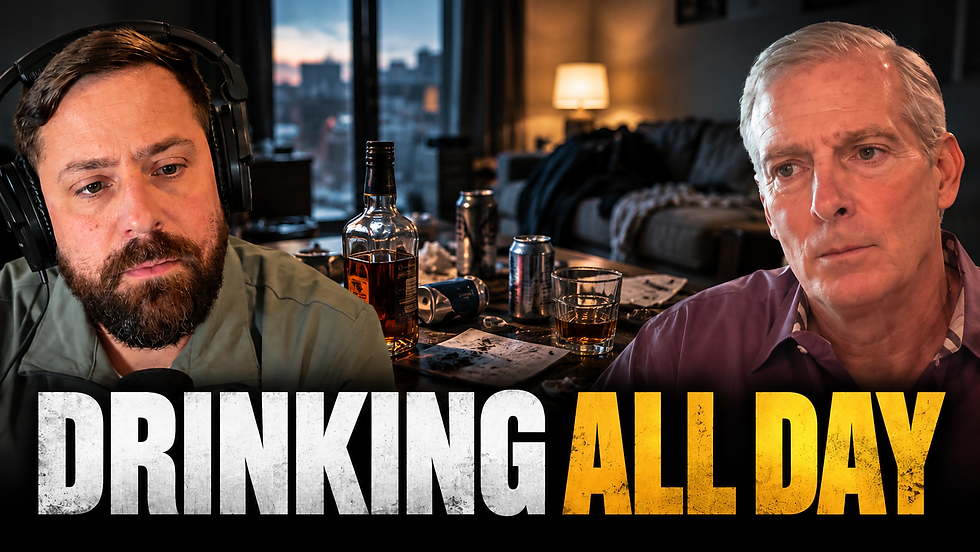
By 3:00 in the afternoon, Les had usually finished six bottles of wine. That's when the hard liquor started. She had no plan to stop.
Today she's sober, running a nonprofit with thousands of members, and sharing her story on the Sober Motivation Podcast because it might help someone stop sooner than she did.
"You don't have to be your worst decision or your worst moment. There can always be a second act." Les, Sober Motivation Podcast
Who is Les?
Les is a former Boston attorney who specialized in liquor licensing, representing bars and restaurants and later holding a senior government role overseeing them. She got sober in December 2024 and founded Sober & Curious Boston, a 501(c)(3) nonprofit hosting alcohol-free hikes, coffee meetups and social events across Boston, the South Shore and Cape Cod.
Yes, a liquor licensing lawyer with a drinking problem. She's heard the joke.
When did her drinking start?
Later than most. Les grew up outside, splitting summers between a lake in Canada and Cape Cod, with sports and school filling the rest. Alcohol was always at the table in her big Irish Catholic family, but it was never forbidden, so it was never exciting.
That changed at 21. Working on a Boston mayoral campaign, she was nervous around colleagues, always two steps ahead of a conversation or two steps behind it. Then came her first gin and tonic. As she put it: "My brain never stops, and alcohol became the solution to that until it became the problem."
From about 22 on, she can't remember a single day she didn't drink.
Can a high functioning alcoholic still be good at their job?
Yes, for a while. That's what makes high functioning alcoholism so hard to spot. Being good at your job doesn't mean your drinking is fine. It usually means the consequences haven't caught up yet.
Les showed up, ran hearings and did good work while drinking every day. Three partners told her she drank too much: a boyfriend in her twenties, another during law school in Washington, D.C., and a husband in her late twenties. Each time, she decided they were the problem. The marriage lasted 10 months.
Boston politics and law school both run on drinking culture, so it was easy to believe she was like everyone else. She wasn't. "They're doing it once in a blue moon. You're doing it every single day."
If this sounds familiar, read Amanda's story on functional alcoholism.
What does it mean if you set rules around your drinking?
If you need rules to control your drinking, your drinking already controls part of you. Les says it plainly: anyone trying to control their drinking has a problem with drinking.
Her guardrails tell the story. Lunch drinks at work only twice a week, and only with other people. On weekends, no more than four drinks before 2:00 PM. She thought those were limits. Looking back, they were evidence.
How fast can drinking get out of control?
Fast. Les held the same daily pattern for nearly two decades, then lost control in her late thirties in a matter of months.
During COVID her drinking actually dropped, because she was working around the clock reopening Boston's bars and restaurants. Then she moved to private practice. Suddenly she had autonomy and a book of business to build, which meant entertaining. The running joke was that bars were her satellite offices.
At the same time, her relationship with her fiancé fell apart, and with it her role as stepmom to his two boys. Her drinking went through the roof.
A typical day: drinking by 6:00 AM. Commuter boat to the office. Three or four gin and tonics when the bar opened at 11:30. Back to the office to show face. More on the boat home. Then drinking until she passed out. She was sure nobody knew. "I have no doubt everyone knew I was drinking."
The decision she still lives with
Les was depressed, living with severe anxiety and behind on paperwork for clients selling liquor licenses. Rather than admit it and ask for help, she forged three documents to push the sales through. She made nothing from it. She was a people pleaser who couldn't say she was drowning.
She's honest about where her head was. She believed she'd fix it before anyone noticed, and if it fell apart, she planned to end her life.
She doesn't hide behind alcohol either. "I don't blame my alcoholism for my mistakes. I own my choices and my decisions."
She was caught. She did five days in detox, mostly because it would look good professionally. Her firm fired her while she was inside, and she went straight back to drinking. Days later, sitting at a bar, she got a call from a Boston Globe reporter: the story was running, and criminal charges were coming.
She eventually pleaded guilty to felony fraud charges, faced possible prison time and lost her license to practice law. She sold her house at a loss and moved into a friend's place with her two dogs.
What finally made Les stop drinking?
Not the charges. Not the threat of prison. Les realized she was looking into giving up her two dogs, who are her whole world, and understood that meant she was ready to stop living too.
Around then, a woman she knew professionally, and knew didn't drink, kept asking her to coffee. Les cancelled at least twice. When she finally went, she'd been drinking all day and brought a Yeti full of booze. The woman shared her own story, then said this:
"The elevator is going down, not up, and the question is where you want to get off." A friend in recovery to Les, as shared on the Sober Motivation Podcast
Les says those words did more than every consequence combined. She later wrote about that coffee in her essay One Year Sober.
Is it safe to quit drinking cold turkey?
For heavy daily drinkers, stopping suddenly can be dangerous and sometimes deadly. A review published by the National Institute on Alcohol Abuse and Alcoholism found seizures can occur in more than 5 percent of untreated people in acute alcohol withdrawal, with over 90 percent of those seizures happening within 48 hours of the last drink (source). If you drink heavily every day, talk to a doctor before you stop.
Les had no insurance and couldn't go inpatient. She did a medically supervised taper at home, writing her daily limit on the fridge: six bottles, then five, then four. She calls it one of the most humbling things she's ever done. It finished in early December 2024.
For what the first days actually feel like, see First Week Sober: What It Actually Feels Like, Day by Day.
What was her first AA meeting like?
Les pictured six old men smoking around a folding table. On the walk in, her friend warned her it would be big and she'd know people.
It was a hall of about 200. Blue collar and white collar. People she'd worked for, people who'd worked for her, people she'd only read about in the paper. For the first time in years, she relaxed. Other people's lives had revolved around the next drink too.
She takes what works from AA and leaves the rest. Her higher power is community, nature and her animals. She credits AA as a huge part of her recovery, and she knew early that meetings alone wouldn't be enough for her.
How do you deal with shame in recovery?
Shame doesn't vanish when you get sober. The goal is to let it push you toward the next right thing without letting it become a life sentence. Les is a convicted felon and disbarred, and she carries that every day. She uses it as fuel, then tries to do what recovery circles call putting the bat down.
It isn't easy. Strangers message her saying she's not really sober or should have gone to prison. One person quoted against her in the Globe had been a guest at her wedding.
When she called her friend in tears over an article, the advice was simple: you can't control what people think, and anyone who enjoys someone else's pain is hurting too.
Through all of it, court dates and possible prison included, she never once thought a drink would help.
Why sober community matters
Take alcohol out and you have to put something back in. For Les, everything was already gone: the career, the fiancé, the stepkids, the house. Six months sober, she was asking herself what she was getting sober for.
The answer started on a women's sober backpacking trip with Laura Van Antwerp of Your Sober Pal. Les is a self-described city girl who couldn't put up a tent. Around that campfire, with women she'd just met, she felt more present than in all her years of bar stools and fundraisers.
Back home, she looked for things to do that didn't end at a brewery. Every run club did. Every yoga class ended with cocktails. So she scheduled one hike on Meetup.
About half the people at that first hike were in recovery. The rest didn't drink for personal reasons, or did drink and just wanted friends and something to do. That mix is still the point.
Founded in July 2025, Sober & Curious Boston now has more than 5,500 members and runs hikes, kayaking, apple picking, zip lining, comedy nights and coffee meetups. It's expanding too, starting with a Central Park walk alongside Sober and Curious New York.
"I have done more in a year and change running this nonprofit, more good than I did in a decade as a corporate lawyer."
What Most People Get Wrong
"I'm not that bad." Les didn't start at six bottles a day. She started with one gin and tonic at 21. Drinking is progressive and quiet. Being earlier on the road doesn't put you on a different road. Read Do You Need a Rock Bottom to Quit Drinking? if that thought is holding you back.
"If I have rules, I'm in control." The rules are the tell. People without a drinking problem don't need a four-drinks-before-2PM policy.
"Nobody knows." Les was certain she was hiding it. Everyone knew. She also rotated liquor stores so clerks wouldn't notice. Corey's story on secret drinking goes deeper. Delivery apps make it easier still: no clerk, no drive, no moment to reconsider.
"My worst moment is who I am." It's one moment. Not the whole person.
What Actually Works
One honest conversation. For Les it was a coffee she cancelled twice. One person telling the truth got through when every consequence didn't.
Medical help to stop safely. If you drink heavily every day, don't white-knuckle it alone. Ask a doctor about detox or a supervised taper.
Community you actually want to show up for. Meetings, online groups, a hiking club. Les uses AA and built something alongside it. Not near Boston? Try online sober meetings or the Sober Motivation app.
Replacing, not just removing. Find what fills the space alcohol took. For Les, it was the outdoors and other people.
Owning it without drowning in it. Take responsibility, make amends where you can, then put the bat down.
Where to find Les and Sober & Curious Boston
Website: sobercuriousboston.com
Upcoming events: sobercuriousboston.com/events
Nervous about a first event? What to expect
Instagram: @soberboston
Meetup: Sober & Curious Boston on Meetup
Les's writing: Sober & Curious Boston on Substack
Support the nonprofit: Donate or volunteer
Les's story, and yours
Les spent years sure she knew who she was: tough, competitive, take-it-or-leave-it. Sobriety showed her someone kinder underneath. In her words, "Sobriety allowed me to be who it turns out I was under all of this."
Your story doesn't have to get as dark as hers for you to stop. Wherever you are, there's a floor to get off on.
Hear Les tell it herself on the Sober Motivation Podcast, or search 300+ sobriety stories for one that sounds like yours. When you're ready for more than a podcast, the Sober Motivation community is here.
If you're having thoughts of ending your life, call or text 988 in the US or Canada. You don't have to carry it alone.


Comments