Sober October: Why Knowing How to Quit Isn't Enough
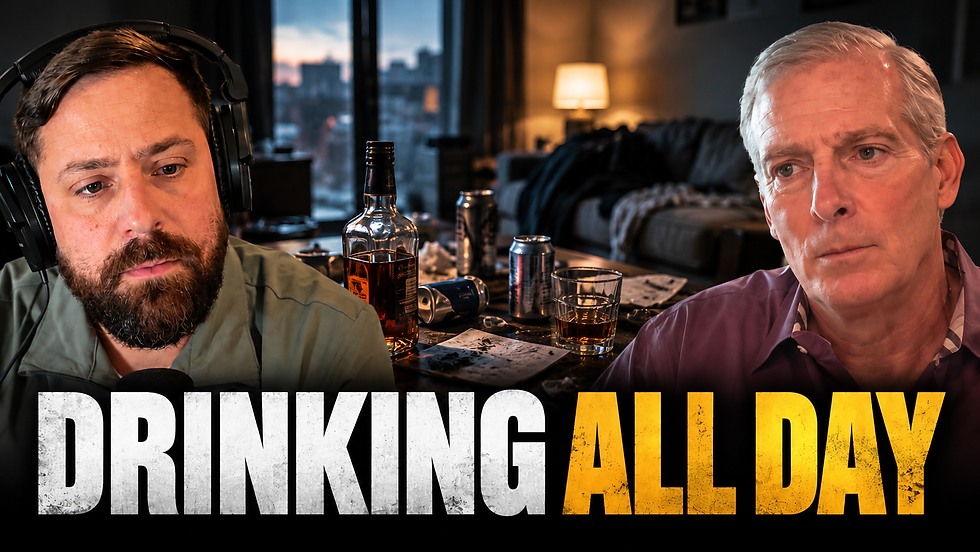
It's October 1. You already know how to not drink for 31 days. You've read the tips and saved the posts, and you probably know exactly what you should do at 6pm tonight.
So did Mike Lassman. He went through treatment center after treatment center and could quote the Big Book. One sponsor told him he had "a Harvard education in recovery."
He still couldn't stay sober. What finally worked for him wasn't new information. It was something simple he'd been avoiding for years. If you're starting Sober October today, his story is worth more than any list of tips.
What is Sober October?
Sober October is a 31-day challenge where people stop drinking alcohol for the whole month. Macmillan Cancer Support started it in the UK in 2014 as a fundraiser. It has since grown into a worldwide reset, a lot like Dry January.
Some people do it to take a break. Others do it to find out whether they can. This post is for the second group.
Why do people who know how to quit keep drinking?
The answer is usually the knowing-doing gap: the space between knowing what you should do and actually doing it. Stanford's Jeffrey Pfeffer and Robert Sutton named it in their 2000 book about businesses, but it fits sobriety perfectly. Plenty of people can recite every coping strategy and still pour the drink at 6pm.
Mike had his first beer at 13 on a canoe trip in Kansas. Kids on the playground had called him "Dumbo" for years, and he'd learned early that people were scary. Alcohol fixed that. "It gave me this confidence," he said. "It made me feel like I belonged."
The drinking followed him through college, into the natural gas business, and onto a Wall Street trading desk where nobody blinked at a hangover. In his early 30s he went to treatment for the first time and stayed sober a year. Then he relapsed. More treatment centers followed, plus Celebrate Recovery and Narconon. Once he made it three years.
By 2011 he had lost his business. His wife had filed for divorce, his kids weren't speaking to him, and he was bankrupt.
"I couldn't take the darkness anymore, you know? It wasn't that I saw a light. Everything was just so dark and my life was so bad that I had no options left." Mike Lassman, Sober Motivation Podcast
Even after that bottom, he left a two-year program at six months, stayed sober about three years, and drank again. His last drink was in 2017.
"I'm an A student here in recovery, but I was acting like an F student." Mike Lassman, Sober Motivation Podcast
What Most People Get Wrong About Sober October
Treating it as a willpower test. Willpower gets most people through the first weekend. Then it's a hard Thursday and that's all you've got.
Doing it alone. Mike went to meetings for years, but on his own terms. "I stayed on the fringes," he said. "I had not surrendered." He showed up late, left early, and talked to nobody.
Going quiet when it gets hard. People with some time often feel they should have this figured out by now, so they keep the urge to themselves. That silence is where the drink starts.
Thinking a slip erases everything. Mike once beat himself up over a three-day binge after a year sober. A friend pointed out he'd been sober 365 of the last 368 days. One bad night in October doesn't cancel the other 30.
Quitting the work once you feel better. Brad puts it this way: if you get a six-pack at the gym, you know it disappears when you stop going. With sobriety we convince ourselves the meetings, the calls and the support are optional once we feel good. That's usually when relapse shows up.
Connect with Mike: https://www.michael-lassman.com/
What Actually Works: The Thing Mike Kept Avoiding
What finally worked was community. His sponsor didn't sugarcoat it:
"Mike, that is your problem. Number one, you don't go to meetings. Number two, when you do, you show up late and you leave early. You don't talk to anybody. So when you disappear, nobody even knows you're gone." Mike's sponsor, as shared on the Sober Motivation Podcast
The prescription was almost embarrassingly simple:
Go to a meeting every day for a couple of months.
Get there 10 minutes early.
Stay 10 minutes late.
Learn everyone's name, and make sure they know yours.
Then add service: volunteering, helping at food pantries, showing up for someone else.
The research backs this up. John Kelly and colleagues at Harvard's Recovery Research Institute have found that changing your social network (adding people who support you not drinking) is one of the main reasons mutual-help groups work. Information alone doesn't keep people sober. People who notice when you go missing do.
How do you stop a craving in the moment?
Mike uses a three-step formula. When a craving hits, he asks his higher power to take the feeling away, tells someone how he feels, and then looks for someone he can help.
He tested it six months out of treatment, in a packed, chaotic Greyhound terminal in Dallas. Everything was running late, he had $50 to his name, and he'd been flying on private jets a few years earlier. There was a bar across the terminal. "I'm gonna go have a drink," he thought.
Instead he said a quick prayer. Then he told the woman next to him in line how he felt. She said she felt the same way. She was trying to get to Seattle to see her fiancé before he deployed to Afghanistan, and now she was going to miss him.
That hit him. Then he spotted a mother with three crying kids and a pile of luggage who didn't know which bus to take. He got out of line and helped her board.
"It all just went away just like that." Mike Lassman, Sober Motivation Podcast
He never went to the bar.
Sober October Tips That Close the Gap
Skip the mocktail roundup. Do these:
Tell three people today. Not a post. Tell them directly, so someone will notice if you go quiet.
Join one community and show up early. Online counts. Just be a face people recognize, not a lurker.
Write down your 6pm plan. Where you'll be, what you'll drink and who you'll text.
Memorize Mike's three steps. Ask, tell someone, help someone.
Decide now what a slip means. It's information, not a verdict. Count the good days.
Plan November 1 before October ends. University of Sussex research on Dry January found people were still drinking less months after the challenge ended. The month works best as a starting line, not a finish line.
Is it too late if this feels like another failed attempt?
No. Mike tried and failed for more than two decades. Today he's been sober since 2017. He's made amends with his kids, remarried, and is working on his third book. He's also putting together a charity to help people who can't afford treatment.
His advice to anyone still struggling: "This doesn't have to be the end of your story. This can be the beginning of your story. It's never too late." Then he added three words: "Find your people."
The Bottom Line
You probably don't need another Sober October tip. You need to do the thing you already know you should do, with other people around you.
"Maybe the answer isn't learning something new. Maybe it's doing something you already know you need to be doing." Brad McLeod, host of the Sober Motivation Podcast
Hear Mike's full story on the Sober Motivation Podcast. If you're doing Sober October and want people in your corner, the Sober Motivation app has live meetings, daily tools, and a community that gets it. Download in the App Store or Google Play.

Comments