She Was a High Functioning Alcoholic. She Never Got a DUI.
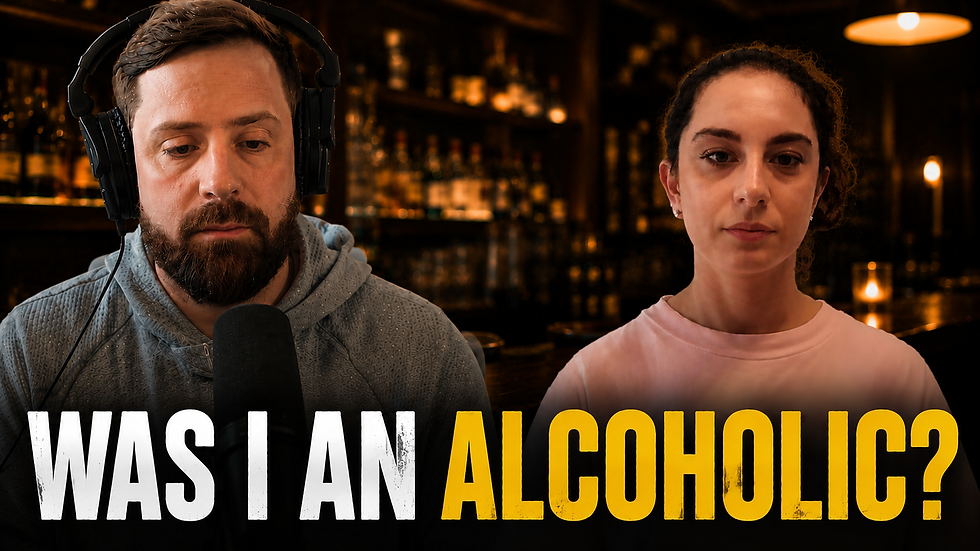
Mateja was sitting on the floor of a hotel room, in front of a mini fridge, pouring tequila down her throat. She did not like tequila. She knew it would make her face swell because she was allergic to it. Her boyfriend was upstairs at a rooftop restaurant waiting for her to come back to dinner. She had told him she just needed ten minutes to finish the free drink from check-in, because she could not let it go to waste.
That moment is what a high functioning alcoholic actually looks like. It is not a person on a park bench. It is a working professional, a violinist with a master's degree, a woman two months away from her wedding, sneaking back to a hotel room to chug a drink she does not even enjoy.
"She never got a DUI. She never got arrested. She never lost her job. So how could she possibly have a problem with alcohol?"
That is the question Mateja asked herself for years. And it is the question that kept her drinking long after her body, her relationships, and her own quiet thoughts were telling her something was off. This is her story from the Sober Motivation Podcast, and the parts of it that might sound like yours.
What Is a High Functioning Alcoholic?
A high functioning alcoholic is someone whose drinking meets the clinical pattern of alcohol use disorder while their external life still appears intact. They keep their job. They pay their bills. They make their flights. The damage shows up in the obsession, the chugging, the blackouts they laugh off the next day, and the slow erosion of the people around them.
Mateja fit the profile almost exactly. She grew up in Grosse Pointe, Michigan. Her mother was a high powered attorney. She majored in music as a violinist at the University of Miami, then went on to grad school at Florida International University. She had a scholarship. She had her own apartment. From the outside, nothing looked wrong.
The trap with this kind of drinking is that nothing has to look wrong for something to be very wrong. If you are wondering whether your own pattern fits, you might also want to read Can You Be a High Functioning Alcoholic? The Quiet Trap of Looking Fine on the Outside.
The First Drink Was at 21. The Pattern Started Almost Immediately.
Mateja did not drink in high school. She did not drink the first three years of college. She wanted to follow the rules. When she turned 21, her mom flew down to Miami and threw her a party at a restaurant.
Her mom asked the staff to water down every drink. There is a video of Mateja taking her first pink shot at midnight, in a dress that matched. Her first reaction after she swallowed it was, "Damn."
There was barely any alcohol in it. The shot was a thimble of liquor in a glass of mixer. The reaction was already there.
After that, drinking became the social glue. Concerts ended in parties. Auditions ended in bars. By her early 20s, she was tracking her drinks in a notebook for her therapist, and the numbers kept landing on the higher end of the page. Her therapist would ask what was going on. Her answer was always the same:
"Oh, well, I'm a social person. I love to socialize, and every time I go out, I drink, and every time I socialize, I drink."
Looking back, she sees the therapist was trying to flag something. At the time, she brushed it off. She was 22. She was having the time of her life.
The Restaurant Industry Made Everything Worse
Mateja started working at a restaurant in grad school. If you have ever worked in food service, you already know what happens next.
"If you think musicians love to party, the restaurant is just a whole different dimension. It was so insidious."
The shifts ended at midnight. The clubs in Miami stayed open until noon the next day. Some of her friends were into harder drugs. She mostly stuck with alcohol, but the access was constant. She was single, working in a culture that, by her account, normalized binge drinking, drug use, and sexual harassment in the same breath.
She also experienced something terrible during this period. A coworker she trusted offered to give her a ride home one night when she was too drunk to drive. She woke up in his bed after an assault she did not consent to. She told one friend three months later. She did not tell anyone else for years. She kept showing up to work. She kept her friend group together. She blamed the alcohol, and then she drank more alcohol to manage what the alcohol had cost her.
If trauma is part of your story, you are not alone. Drinking to Cope with Trauma: Johnny's Story covers this pattern in more depth.
The Obsession Was the Real Tell, Not the Volume
For a long time, Mateja looked for proof that she was an alcoholic in the wrong place. She looked at the number of drinks. She looked at consequences. No DUI. No job loss. No hospital. So she kept drinking.
The real signal was always the obsession. Three moments make it obvious.
The plane. Her mom needed brain surgery at the Mayo Clinic. Mateja was flying first class with her family to be there for it. The flight attendant took her half-finished drink for landing. She was furious. She texted her boyfriend about the wasted half cup of alcohol instead of thinking about her mom going into surgery the next morning.
The hotel room. The free tequila she did not like. The drink she knew would make her swell. Sitting on the floor in front of a mini fridge so she could finish it before going back to her boyfriend at dinner.
The going away party. Two months before her wedding, she threw herself a goodbye drinks with coworkers she had only ever seen in a professional setting. She told her mom on the phone she would have one drink. The server offered a double for the same price. She ended up needing a Lyft home. Her fiance, who does not drink, told her:
"You are not acting like someone that's about to get married. You're not acting like a wife. I don't even know if we should get married."
She sobered up inside her own head instantly. And then she kept drinking for four more months, because how do you have a wedding, a bachelorette, a rehearsal dinner, and a brunch the day after without alcohol?
If you recognize yourself in any of this, the obsession piece is worth understanding on its own. Why Do I Crave Alcohol at Night? The Honest Reason Behind the 6pm Wine Pour walks through what is actually happening when alcohol stops feeling like a choice.
You Do Not Have to Hit Rock Bottom to Quit
Mateja quit on a Monday morning at her cubicle. There was no crisis. There was no DUI. She had been texting her mom 30 minutes earlier about a wine tasting.
What happened was a memory. A few nights earlier, at her mom's birthday dinner, she had ordered the only cocktail at the table. Her mom looked at it and asked, "Mateja, why do you have to have a cocktail every time we go out?"
Mateja said, "Because it's fun."
Sitting at her desk a few days later, she heard the question again in her own head. And this time the answer was different.
"I never planned that I was going to quit. I never had anything planned out. Something just hit me. Screw this. I'm done with alcohol."
She called the liquor store, confirmed they were sold out of the wine she wanted, and then quietly decided she was done. She texted a few people. Every single one said, "Good for you."
She will hit five months on June 5, 2026. She has not had a drink since.
This is one of the most common patterns we hear on the podcast. The day people actually quit is rarely the day they planned to. It is usually a quiet Monday. If you are waiting for a dramatic bottom to give you permission, you may be waiting for something you do not need. The post Gray Area Drinking: You Don't Have to Hit Rock Bottom to Know Something's Off is built around exactly this idea.
What Five Months Sober Actually Looks Like
Mateja's first sober vacation happened a few months in. She watched the people at the bar spend hundreds of dollars on drinks, forget to put on sunscreen, get sunburns, and head home dehydrated and hungover. She had a mocktail. She got home easily. She hiked. She put the alcohol money toward food.
The other changes are not dramatic on their own, but together they form the case for staying sober:
Seven to nine hours of sleep a night
No morning anxiety, no waking up to vomit
Going to the gym and actually feeling hydrated
Going back to church and to social events for people in her 20s and 30s
Trying pickleball for the first time
Anxiety lower than it has been in her adult life
Therapy and medication doing the work alcohol pretended to do
She also found a community. About six days in, she went to her first meeting. A woman around her age with 10 months sober shared a story that sounded exactly like hers. No DUI. Always worked hard. Always paid the bills. Friends celebrated her for being the life of the party.
Mateja walked up after the meeting, told her she had just picked up her white chip, and started crying. The woman asked if she needed a hug. They still text.
The Sponsor Question That Changed Everything
It took Mateja four months before she could introduce herself as an alcoholic. She felt it was disrespectful to people who had been hospitalized, lost jobs, hurt people with their cars. Her newer sponsor asked her why she never used the word.
Then she said something that reframed it.
"It's not about the number of drinks you have. It's about when you have a drink, how does it make you feel? And what's the behavior?"
When Mateja ran her own life through that filter, the answer was obvious. Chugging tequila she was allergic to. Texting boyfriends about confiscated airplane drinks. Finishing the bottle because not finishing felt like a sin. The volume was never the diagnosis. The relationship with the substance was.
Practical Takeaways From Mateja's Story
If you are reading this and quietly wondering about your own drinking, these are the moves she would make again.
Stop using "I never got a DUI" as proof you are fine. External consequences are a lagging indicator, not a screening tool.
Watch the obsession, not the drink count. How you think about alcohol when you are not drinking matters more than how much you drink when you are.
You do not need a plan. Mateja quit on a Monday morning at her desk. The decision can be that small.
Tell one person. She texted a few people the day she quit. Every single one said, "Good for you." Most people are not waiting to judge you.
Replace the dopamine, do not just remove it. The gym, walks, meetings, church, pickleball, mocktails on vacation. The hit has to come from somewhere.
Try one meeting. Mateja found her first real "me too" moment six days in, from a stranger her age with 10 months sober.
Frequently Asked Questions
Can you be an alcoholic if you have never had a DUI or lost a job?
Yes. High functioning alcoholism is defined by the relationship with alcohol, not by external consequences. If you cannot leave half a drink behind, if you obsess about wasted alcohol, if you regularly drink more than you planned, those are the patterns clinicians look for. A clean record does not rule out a drinking problem.
What is gray area drinking?
Gray area drinking is the space between casual drinking and severe alcohol use disorder. People in this zone are not falling apart, but they are also not at peace with how much or how often they drink. Many high functioning alcoholics live here for years before quitting.
Why do high functioning alcoholics keep drinking even when they know it is hurting them?
Often because the people around them never see the worst of it. Friends see the fun. They do not see the vomiting, the morning anxiety, or the chugging in private. Without outside friction, the only voice telling the drinker to stop is their own, and that voice is easy to ignore until it is not.
Do you have to go to AA to quit drinking?
No. Mateja went to meetings and found them helpful, but there are many paths. Some people use therapy, medication, sober communities online, the Sober Motivation app, books, podcasts, or some combination. The right path is the one you will actually do.
How do I know if I should try quitting?
If you are asking the question, that is information. Mateja's test was simple. She asked herself if she could still have fun without alcohol. The answer scared her. That is usually the answer that means it is worth trying.
The Bottom Line
Mateja spent years looking for permission to consider herself an alcoholic. She kept waiting for the DUI, the job loss, the hospital visit. None of it came. What came instead was a quiet morning at a cubicle and the realization that she had been working very hard to keep a relationship alive with something that no longer loved her back.
If you are sitting on the floor of a hotel room, or texting someone about a confiscated drink, or planning your week around when you can have the next one, you do not need a dramatic bottom to put it down. You just need a Monday.


Comments