Gray Area Drinking: When Your Life Looks Fine but Alcohol Is Running the Show
Updated: 5 days ago
At a baseball game in Omaha, Nebraska, Todd Kinney's 15-year-old son pulled him aside in the concourse after the final out and asked a question that stopped him cold.
"Dad, do we need to take an Uber home?"
Todd hadn't been drinking much that night. He was driving. His son hadn't seen him drink excessively that day. But the question still came, because enough had happened over enough years that his son wasn't sure.
That moment is what gray area drinking actually looks like. Not a DUI. Not a public scene. Not a lost job. Just a teenager quietly wondering if his dad is safe to drive home from a baseball game, because past experience had taught him to wonder.
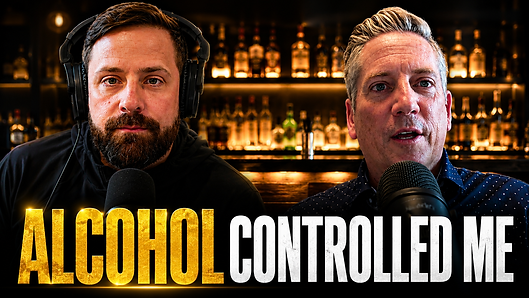
Gray area drinking is the long middle ground between "I can take it or leave it" and a diagnosable alcohol problem. It's where alcohol occupies enormous mental and emotional real estate without destroying your life in ways other people can easily see. Todd, an attorney from Omaha and author of I Didn't Believe It Either: One Dad's Discovery That Everything Is Better Without Alcohol, joined Brad McLeod on the Sober Motivation Podcast to share what it's like to live in that middle ground for years, and what finally pulled him out.
What Gray Area Drinking Actually Looks Like
The movies have a version of the problem drinker that most people don't recognize themselves in. The disheveled guy with a flask. The one losing jobs and getting hauled into court. The person who's crashed everything visible.
Todd Kinney didn't look like any of that. He had a good career, a family, a house. He didn't drink every day. He was mainly a weekend and social drinker. He never got arrested. He never made a scene in public.
But here's what was happening on the inside.
"If it was a Tuesday and we had a social event or something on Thursday where I knew we were gonna be out, I knew I was gonna be able to drink, I was thinking about that night a lot. Who was gonna be there, what kind of event it was gonna be, how much I could drink, what I had going on Friday morning. I did a lot of planning around my drinking."
Gray area drinking often has this signature quality: the person may not drink every day, but alcohol consumes a disproportionate share of mental and emotional energy. If they're not drinking, they're thinking about when they can. If they're not thinking about the next drink, they're recovering from the last one.
Todd put it plainly: alcohol "had control over me to some extent, and that's never good."
On the outside, he looked like a guy who had it together. On the inside, he was fighting a constant, exhausting internal battle that he couldn't discuss with anyone, including his wife and closest friends. If this sounds familiar, you're not imagining the problem. Read Gray Area Drinking: You Don't Have to Hit Rock Bottom to Know Something's Off for more on what this really feels like from the inside.
The Shame Cycle That Keeps People Stuck for Years
For Todd, the pattern started in college. He'd drink more than he intended. He'd wake up the next morning not remembering parts of the night. He'd feel ashamed and embarrassed and regretful. Then he'd talk himself out of it, tell himself it wouldn't happen again, and move on. Then it would happen again.
This is the cycle that keeps gray area drinkers stuck for years, sometimes decades. The shame arrives, gets buried, and the next drink temporarily numbs the discomfort. Then the shame comes back, and the whole loop starts over.
"I would wake up on those Saturday mornings and Sunday mornings and go through that shame cycle. Again, even at age 30, I didn't think much of it. I just sort of got through it, minimally processed it as much as I could, and I'd talk myself into, 'Well, it's okay to drink tonight. Just make sure that doesn't happen again.'"
What made it lonelier is that Todd kept it entirely to himself. "For the longest time, I really felt like I was the only person on Earth that struggled with alcohol in the way that I did," he said. "And it turns out that couldn't be further from the truth. But at the time, it felt very isolating and very lonely, so I didn't talk about it. Even with my wife and my closest friends."
That isolation is one of the most common features of this kind of drinking. Because you know your drinking doesn't look severe enough to explain to someone else, you don't explain it. And so the weight stays with you alone.
The Hidden Full-Time Job of Looking Okay
Brad described it well during their conversation: keeping the lid on a gray area drinking problem is "sort of like another full-time job."
Todd agreed without hesitation. "It took a lot of work. It took a lot of effort."
His external defense was humor. When he drank too much, he'd make jokes about it. When others made jokes about it, he'd laugh along. Anything to deflect from what was actually going on underneath.
This is one of the ways gray area drinkers become so skilled at appearing normal. They build a whole parallel life on the surface, one that shows up to work, raises kids, and appears to be doing fine. The internal life is entirely different.
Another thing holding Todd back from considering quitting: stigma. He was convinced that if he stopped drinking, people would assume the worst about what his drinking had looked like.
"I thought if I quit drinking, what are people going to think about what my drinking was like?" he said. "I was worried that people were gonna think I rolled out of bed and took a swig of vodka from the bottle in my bedside table, and I didn't want them to think that."
That fear, of being perceived as worse off than you were, is one of the more counterintuitive traps of gray area drinking. The stigma around what "an alcoholic" looks like is so powerful that it convinces people to keep drinking rather than risk being associated with the label.
How Alcohol Keeps You from Growing
One of the most important insights Todd shared is that alcohol doesn't just cause direct harm. It also quietly prevents you from getting better.
He described alcohol as a Band-Aid stretched across everything in his life. While it was there, he wasn't doing the meaningful work of examining what wasn't working.
"What alcohol did for me was it just allowed me to coast over things that were not as good as they could be. It kept me from meaningfully evaluating other areas of my life that could be better. And whenever I would get to a point where things would start percolating in my head about maybe doing that, I would drink. And then you forget about it."
The things that are percolating don't disappear. They just go quiet. And quiet is not the same as resolved.
When Todd finally quit drinking in October 2019, after six years of what he calls "meaningfully evaluating" his relationship with alcohol, the change in his nervous system was immediate and striking.
"My nervous system is so much calmer since I've removed alcohol. It's crazy. I didn't even know you could live like this," he said.
This is one of the most underreported aspects of quitting. The baseline anxiety that many people assume is just part of their personality turns out to be, in large part, a byproduct of regular alcohol use. For more on what this pattern looks like, read Can You Be a High Functioning Alcoholic? The Quiet Trap of Looking Fine on the Outside.
The Moment That Made It Real
Todd had been slowly building toward quitting for years. He'd started seeing a therapist in 2013. He'd tried every form of moderation and management he could think of. He knew something needed to change.
But the moment that finally broke through his defenses happened at a College World Series game with his oldest son and a group of kids.
After the game, in the concourse, his son asked: "Dad, do we need to take an Uber home?"
"I was kind of puzzled because I had not drank very much that day," Todd recalled. "He had not seen me drink very much that day, so I wasn't sure where this was coming from."
But his son had seen enough on other occasions to not be certain.
"I could not stop thinking about that the rest of the day. It was the first thing I thought of when I woke up the next morning," Todd said. "What I could not get past was my son didn't know if he had a safe ride home from a baseball game with his dad because he had seen me and my friends drink excessively in the past."
He didn't have to say much more than that. "Parenting is hard. But the one thing every parent can agree on is we want our kids to feel safe. And here I was, because of my drinking, not letting my child feel safe about a ride home from a baseball game."
Todd didn't quit the next morning. It took a few more months. His last drink was in October 2019. But that question in the concourse was the turning point, the moment he could not run from.
What Nobody Tells You About Life on the Other Side
Before he quit, Todd had a long mental list of things he was convinced would happen. He'd never have real fun again. Vacations would be dull. His friendships would suffer. The good times, the stories, the connection, all of it would be gone.
He has a chapter in his book titled "None of the Bad Things Happened."
"I enjoy all of those things more as a non-drinker than I did as a drinker. All of them are better. It's not even close," Todd said.
He's more present with his four kids, calmer with teenagers who push his buttons, and more genuinely connected to the people he's been close to for decades.
"The connecting I do with people now that alcohol is removed from my life is not comparable to what I was doing before. It's so much more real. It's so much more genuine. It means more," he said.
The fear of quitting, he now understands, was shaped by decades of cultural messaging telling us that alcohol belongs at every occasion, good or bad, happy or sad. Todd called it "one of the most successful marketing campaigns in the history of the world, if not the most successful." But he said it plainly: it's a house of cards once you're on the other side of it.
"You couldn't pay me to go back to my drinking version," he said. "And I had a pretty blessed life when I was drinking. But this is so much better."
Todd Kinney's book, I Didn't Believe It Either: One Dad's Discovery That Everything Is Better Without Alcohol, is available on Amazon. It won the 2026 American Legacy Book Awards in the Health: Addiction and Recovery category. If any part of his story sounds familiar, it's worth reading.

Frequently Asked Questions
What is gray area drinking? Gray area drinking is alcohol use that falls between casual social drinking and a diagnosable alcohol use disorder. A gray area drinker may not drink every day and may appear functional on the outside, but alcohol takes up a disproportionate amount of mental energy, and the person often experiences a recurring shame cycle they struggle to break.
Do you have to hit rock bottom to quit drinking? No. Many people who quit drinking have never lost a job, received a DUI, or experienced a public crisis. For gray area drinkers like Todd Kinney, the tipping point is usually internal: the ongoing shame cycle, the loss of presence with family, and the slow recognition that alcohol is taking up far more than it's giving back.
Can alcohol cause anxiety? Yes. Regular alcohol use is closely linked to elevated anxiety, particularly in the days following drinking. Many people assume their anxiety is a baseline personality trait. After quitting, it often decreases significantly. Todd described his nervous system as "so much calmer" after removing alcohol, adding that he didn't know it was possible to feel that way.
How does quitting drinking affect parenting? For Todd, quitting made him measurably more present, calmer, and more emotionally available for his four kids. He described being able to stay calm during tense moments with his teenagers, something that felt out of reach when alcohol was regularly in the picture. He also freed up the mental energy that had previously been consumed by planning around drinking.
Is life actually better without alcohol? For Todd Kinney, the answer is unambiguous. Every activity he feared would be less enjoyable without drinking, including travel, golf, socializing, and vacations, turned out to be better. He attributes this to being fully present, having a calmer nervous system, and experiencing genuine connection with the people in his life rather than connection that was mediated by alcohol.
You don't have to do this alone. The Sober Motivation App has live sober meetings every day, a day counter, and a community that gets it. Download free on iPhone or Android.
Want more stories like this? Listen to the Sober Motivation Podcast.


Comments